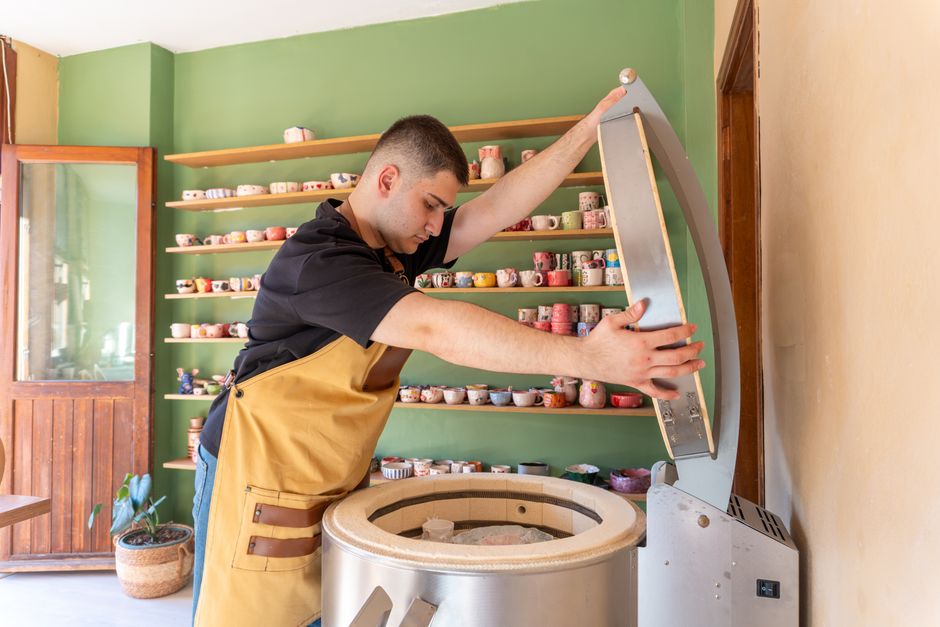
Firing is one of the most critical stages in ceramic production. The transformation of raw clay into a durable ceramic object depends on carefully controlled heating and cooling cycles. Each clay body—stoneware, porcelain, and earthenware—has a distinct mineral composition that responds differently to temperature changes. Understanding how to adjust firing schedules for these materials helps potters achieve the desired physical and aesthetic qualities in their work.
A firing schedule refers to the planned sequence of temperature changes inside the kiln, including ramp rates, target temperatures, soak times, and cooling phases. These parameters are not arbitrary; they are based on the specific thermal behavior of each clay body. The same schedule that works well for stoneware may cause porcelain to deform or earthenware to bloat. Therefore, tailoring the schedule to the clay body is essential for consistent results.
This article provides an overview of how firing schedules differ across common clay types. It explains the reasoning behind temperature choices, soak durations, and cooling recommendations. The goal is to offer a process-oriented understanding that potters can apply when planning their own firings.
Understanding Clay Bodies and Their Composition
Clay bodies are blends of natural clays and other minerals that determine their firing behavior. Stoneware contains varying amounts of iron, feldspar, and silica, which allow it to vitrify at temperatures between 1200°C and 1300°C (cone 6 to cone 10). Its high iron content gives it a characteristic brown or buff color and contributes to its workability. Porcelain, on the other hand, is made from fine kaolin, feldspar, and quartz, with very low iron content. It matures at similar or slightly higher temperatures but has a narrower firing range due to its tendency to deform if overfired. Earthenware contains more fluxing impurities, such as iron and calcium, which cause it to melt and become glassy at much lower temperatures, typically 1000°C to 1150°C (cone 06 to cone 2).
These compositional differences affect how each clay body absorbs heat, expands, contracts, and reacts to quartz inversion—a crystal phase change at around 573°C that can cause cracking if the kiln passes through it too quickly. Therefore, the firing schedule must account for the specific thermal stresses that each material undergoes. For example, porcelain’s tight particle packing makes it more sensitive to sudden temperature changes, while earthenware’s higher porosity allows for faster cycles in the lower temperature ranges.
Factors Influencing Firing Schedules
Several variables influence how a firing schedule is designed. The kiln type—electric, gas, or wood—affects the heating rate and atmosphere. Electric kilns offer precise control over temperature but have limited reduction capabilities. Gas kilns allow for reduction atmospheres, which can alter clay and glaze colors, but require more careful monitoring of oxygen levels. Wood firing introduces fluctuating temperatures and ash deposits, which can behave differently with each clay body.
Load density also matters. A densely packed kiln retains heat longer than a sparse one, so ramp rates may need adjustment to ensure even heating. The shape and thickness of pieces influence how quickly they absorb heat; thick-walled vessels may need longer soaks at peak temperature to achieve full vitrification. Additionally, the desired surface finish—matte, glossy, crystalline—can require specific cooling cycles, such as a slow cool through the quartz inversion zone to prevent dunting, or a rapid cool to preserve certain color effects.
Potters often rely on cone ratings to determine the appropriate target temperature. Cones are pyrometric devices that measure heat work, combining both temperature and time. Each clay body has a typical maturation cone range. For instance, stoneware is often fired to cone 6 or cone 10, while earthenware matures at cone 04 to cone 06. Understanding these reference points helps in setting the final temperature and soak duration.
Stoneware Firing Schedules
Stoneware is valued for its strength and ability to hold liquids without glazing. Its firing schedule typically consists of two main phases: bisque and glaze firing. The bisque firing is done at a lower temperature, usually around cone 04 to cone 06, to remove organic materials and bind the clay into a porous state that can absorb glaze. The temperature is raised gradually to prevent steam from building up inside the ware. A common schedule for bisque firing in an electric kiln includes a slow ramp of 50–80°C per hour up to 600°C, followed by a faster ramp to the peak temperature, with a short soak of 10–15 minutes at the end.
The glaze firing for stoneware reaches the maturation temperature, typically cone 6 (1222°C) or cone 10 (1300°C). The ramp rate in the upper range is often slowed to allow the glaze to melt evenly. A soak of 15–30 minutes at peak temperature helps the clay body vitrify and allows the glaze to flow and heal pinholes. Cooling can be natural, but some potters choose to slow the cooling through the 750°C to 550°C range to reduce the risk of dunting from quartz inversion. In reduction firings, the atmosphere is adjusted during the last stages of heating to create distinctive effects, such as iron spots or carbon trapping.
It is important to note that these parameters are not fixed. Different bodies within the stoneware category—such as white stoneware or grogged stoneware—may require adjustments. For example, heavily grogged clay can handle faster ramps because the grog reduces shrinkage stress, while finer stoneware may need more controlled heating.
Porcelain Firing Schedules
Porcelain demands a more careful approach because of its sensitivity to thermal shock and its tendency to deform at high temperatures. The bisque firing for porcelain is often performed at a lower temperature than stoneware, around cone 06 to cone 09, to maintain a porous surface for glaze application. The ramp rate should be moderate, especially between 300°C and 600°C, where large amounts of water vapor and organic burnout occur. A hold of 30 minutes at 600°C is sometimes used to allow complete oxidation.
The glaze firing for porcelain is typically done at cone 6 to cone 10, with very controlled ramping in the last 100°C. Overfiring by even a few degrees can cause the piece to slump or bloat. Many potters prefer to reach the target temperature at a slow rate of 50–80°C per hour in the final segment, then soak for 10–20 minutes. Longer soaks can increase translucency in thin-walled pieces, but they also raise the risk of deformation. The cooling phase is critical: porcelain should be cooled slowly through the quartz inversion zone, often by turning off the kiln and leaving it closed until below 200°C. Rapid cooling can create microcracks or even shatter the piece.
Some porcelain bodies require a hold at around 1200°C for the conversion of quartz to cristobalite, especially for translucent ware. This step is body-specific and may be recommended by the manufacturer. Because porcelain is less forgiving than other clays, test firings are essential before committing to a full kiln load.
Earthenware Firing Schedules
Earthenware is more forgiving in terms of firing speed and temperature tolerance. Its lower maturation zone, between cone 04 and cone 06, means that less energy is needed and cycles can be shorter. The bisque firing for earthenware is often done at a temperature just below the maturing point, such as cone 06, to ensure the body is still porous for glaze application. Ramp rates can be relatively fast, often 100–150°C per hour, because the clay’s higher porosity allows steam to escape easily. A short soak of 10 minutes at peak is sufficient to even out temperature across the kiln.
The glaze firing for earthenware reaches the same or slightly higher temperature, depending on the glaze formulation. Many commercial earthenware glazes mature at cone 04 to cone 06. The ramp can be brisk, but caution is still needed to avoid pinholes and blistering from over-fast heating in the glaze melt stage. A soak of 10–20 minutes helps the glaze to homogenize and reduce defects. Cooling can be natural; earthenware is less prone to dunting because the quartz inversion occurs at a temperature where the clay is still relatively porous, allowing some stress relief.
Specialty firings, such as raku or pit firing, use earthenware bodies and involve rapid heating and cooling cycles that differ greatly from standard schedules. In raku, the ware is removed from the kiln while glowing red and placed in combustible materials to create dramatic surface effects. These processes rely on the clay body’s ability to withstand thermal shock, which is higher in heavily grogged earthenware mixes.
Adjusting Schedules for Specific Outcomes
Firing schedules can be modified to influence the final appearance and properties of the ware. For example, a slower ramp through the upper temperature range can promote crystal growth in glaze surfaces, leading to matte or crystalline finishes. Conversely, a faster ramp and short soak may preserve bright colors and reduce glaze flow on vertical surfaces. Cooling rate also plays a role: rapid cooling can fix colors and prevent devitrification, while extended cooling encourages the formation of crystals and can create depth in celadon glazes.
The atmosphere inside the kiln is another variable. In oxidation firing (electric?), oxygen is abundant, resulting in clean colors and stable glazes. In reduction firing (gas or wood), a lack of oxygen alters the chemistry of metallic oxides, producing effects like copper reds or iron speckles. The switch to reduction must occur at the right moment in the schedule, and the duration of reduction affects the final result. These adjustments require careful note-taking and testing to understand how each clay body responds.
Ultimately, no single firing schedule works universally for all clay bodies. Potters are encouraged to document their own results, noting temperature curves, soak times, and cooling behavior. By making small adjustments and observing outcomes, a potter can develop personalized schedules that best suit their clay body and kiln equipment.